
Manaslu Circuit Trek Season: When Should You Actually Go?
13th Aug, 2026

Manaslu Circuit Trek Season: When Should You Actually Go?
Table of Contents
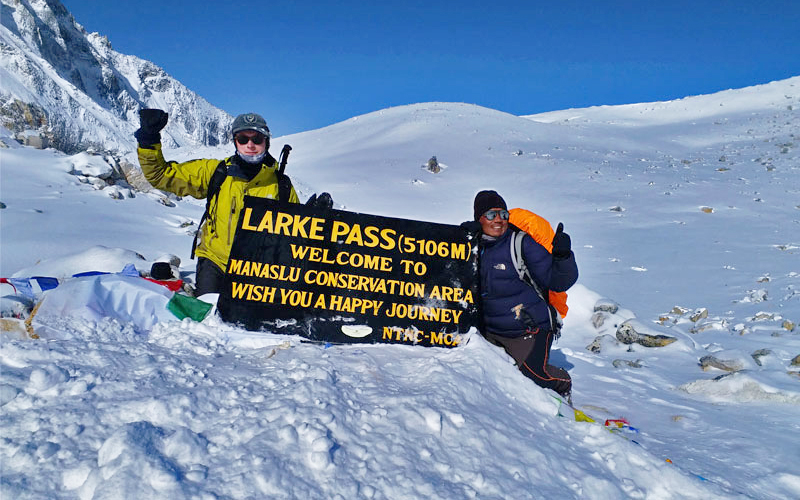
Every year we get the same message from trekkers a few weeks before they're due to fly into Kathmandu: "Is October too late?" or "Can we still cross Larke Pass in early December?" It's a fair question. The Manaslu circuit trek season isn't just about picking a pretty month on a calendar — it decides whether you'll be crossing the 5,106m Larke La in clear, walkable snow or turning back because a guide won't risk it. This guide is built from what we actually see on the trail each year, not just a generic seasonal calendar copied from a brochure.
If you're weighing spring against autumn, wondering whether winter is worth the gamble, or trying to work out exactly which weeks to book, here's what we'd tell you if you called our office in Kathmandu.
Why Timing Matters More on Manaslu Than on Other Treks
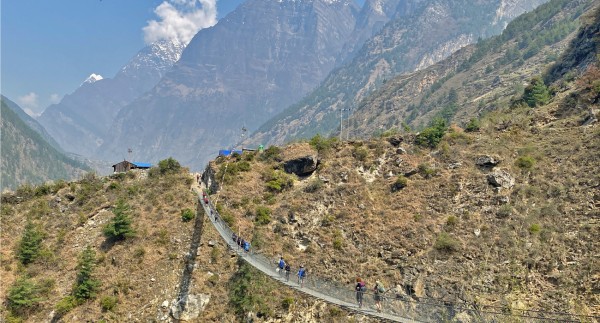
The Manaslu Circuit isn't a gentle valley walk. You start in subtropical terraced farmland around 700m and finish crossing an alpine pass above 5,100m, all inside about two weeks. That range of elevation means you're effectively walking through several climate zones in a single trip, and each one reacts to the season differently.
Lower down, near Soti Khola and Machha Khola, monsoon rain turns the trail muddy and occasionally triggers landslides that block the jeep road. Higher up, near Samdo and Dharamsala, winter snow can bury the trail to Larke La Pass entirely, and teahouses that stay open through autumn sometimes shut for the season. So "best time" on Manaslu really means: which window keeps both ends of the trek — the river gorge and the high pass — workable at the same time.
The Short Answer: Spring and Autumn
If you want the quick version: late September to early December (autumn) and March to May (spring) are when the Manaslu Circuit Trek works best for most people. Outside these windows, you're either dealing with monsoon rain and leech-heavy lower trails, or winter cold that can close Larke La Pass without warning.
That said, "spring and autumn" isn't a complete answer on its own — plenty of competing guides stop right there. What actually matters is which weeks inside those seasons suit your priorities, because early autumn is a very different trek from late autumn, and early spring is nothing like late spring.
Autumn (Late September to Early December)
Autumn is what most trekking agencies, including us, recommend first. The monsoon clears out by mid-to-late September, washing the dust out of the air and leaving genuinely sharp mountain views. Rain becomes rare, trails firm up, and the whole route from Machha Khola to Bhimtang feels more predictable.
Early autumn (late September–early October) can still carry the tail end of monsoon moisture, especially in the lower gorge sections. We've had groups get a few wet afternoons around Jagat and Deng in this window, so pack a proper rain shell even if the forecast looks clean.
Mid autumn (mid-October–mid-November) is the sweet spot. This is when you get the most reliable weather of the entire year, stable daytime temperatures for walking, and Larke La Pass is at its most consistent — cold, but usually clear and snow-free enough to cross without technical difficulty. It's also, unsurprisingly, the busiest few weeks on the trail. Teahouses in Samagaun and Samdo fill up, so if you're booking a specific departure in this window, do it early rather than assuming you'll find a bed on arrival.
Late autumn (late November–early December) rewards trekkers who don't mind cold mornings. Crowds thin out noticeably, the light is beautiful, but night-time temperatures at Dharamsala and Samdo can drop well below freezing, and there's a real chance of an early snowfall closing Larke La for a day or two. If you're trekking this late, build in a spare day near the pass rather than a tight flight connection home.
Spring (March to May)
Spring is the other reliable window, and it has its own personality rather than being a lesser version of autumn. Temperatures climb gradually through the season, rhododendron forests below Namrung and Lho come into bloom from around late March, and the lower valley sections feel genuinely warm during the day.
Early spring (March) still carries winter's cold at altitude. Snow can linger on Larke La into the first half of the month, and some teahouses higher up may only just be reopening after winter. It's a good time if you want quiet trails and don't mind the extra layers.
Peak spring (April) is when most spring departures happen. Views are generally good, though spring afternoons in the Himalaya tend to build cloud and haze more than crisp autumn mornings do — so if photography of Manaslu itself is your main goal, mornings are your best window, and October edges out April for pure visibility.
Late spring (May) brings warmer days and the first pre-monsoon build-up of cloud and occasional afternoon showers, especially toward the end of the month. It's still trekkable and often quieter than April, but weather becomes a little less predictable as the season turns.
What About Winter and Monsoon?
We won't tell you these are impossible — some experienced trekkers do go, and a handful genuinely enjoy the solitude. But we'd be doing you a disservice if we didn't explain the real trade-offs.
Winter (December–February) means serious cold above 4,000m, frequent snow that can close Larke La for days at a time, and several higher teahouses reducing services or closing outright. If winter is your only option, build significant flexibility into your itinerary and go in with a guide experienced in reading pass conditions — this isn't a season to push through on a fixed schedule.
Monsoon (June–August) brings heavy rain to the lower Budi Gandaki gorge, an increased landslide risk on the jeep road to Machha Khola, leeches on the forested lower trail, and clouds that regularly block mountain views. On the upside, this is also when the trail is at its quietest, and the upper Nubri valley — being partly in a rain shadow — sometimes stays drier than the lower gorge. It's a real option for trekkers who prioritise solitude over guaranteed views, but go in expecting delays rather than a smooth timeline.
A Practical Way to Choose Your Month
Rather than defaulting to "spring or autumn" and picking at random, it helps to ask yourself three questions:
- Do I need guaranteed mountain views, or is a good trek more important than a perfect photo? If views matter most, mid-October to mid-November wins.
- Do I want quieter trails and teahouses, even if it costs a little in weather reliability? Late autumn or early spring both trade some certainty for far fewer people on the trail.
- How flexible is my return flight? If you can't absorb a delay, avoid the very edges of each season — early March, late November, early October — when a single snowfall or storm can hold you at Larke La longer than planned.
Booking and Permit Timing
Because the Manaslu region is a restricted area, you'll need a licensed guide and the Manaslu Restricted Area Permit arranged through a registered trekking agency — this isn't something you can pick up independently at the trailhead. For the busiest weeks of October and April, we'd suggest confirming your dates and permits at least a month ahead, since teahouse capacity in Samagaun and Samdo genuinely does get tight in peak season. If your dates are flexible, booking outside the absolute peak (say, early October or early November) usually means an easier time finding rooms without giving up much in terms of weather.
Our Take, Honestly
If you ask us directly which single window we'd recommend, it's the second half of October into the first half of November. It's not a unique answer — most experienced operators will tell you the same — but it's the window where weather, trail conditions, and Larke La Pass line up most consistently, year after year. Spring in April is a close second, particularly if crowds concern you more than a slightly hazier mountain view.
Whatever month you choose, the trek itself doesn't change: you're still walking the Budi Gandaki gorge, passing through Tibetan-influenced villages like Lho and Samagaun, and crossing one of the more demanding passes in Nepal. Season decides the conditions you'll meet along the way, not whether the trek is worth doing.
If you'd like help matching a departure date to your travel window, take a look at our Manaslu Circuit Trek itinerary or get in touch — we plan departures around exactly these seasonal patterns every year.
Frequently Asked Questions
What is the best month for the Manaslu Circuit Trek? October is generally considered the single best month, offering the most stable weather and clearest views of the season. April is a strong second choice for those who prefer fewer crowds.
Can you trek Manaslu Circuit in winter? Yes, but it's demanding. Expect serious cold above 4,000m, a real risk that snow closes Larke La Pass for a few days, and reduced teahouse services higher up the valley. Build flexibility into your schedule if you go.
Is the Manaslu Circuit Trek open during monsoon season? It's technically open, but the lower Budi Gandaki gorge sees heavy rain, an increased landslide risk on the access road, and frequent cloud cover that blocks mountain views. It suits trekkers who prioritise quiet trails over guaranteed visibility.
Is spring or autumn better for Manaslu Circuit Trek? Autumn generally offers more stable, predictable weather and clearer mountain views, especially in October and early November. Spring offers milder temperatures, rhododendron blooms, and typically fewer trekkers, particularly in March and early April.
Does snow close Larke La Pass? Yes, snowfall can close or seriously slow crossings of Larke La Pass, most commonly in winter and at the outer edges of spring and autumn. A guide experienced with the region will know when to wait a day rather than push through.
How far in advance should I book the Manaslu Circuit Trek? For October and April departures, aim to confirm your dates and permits at least a month ahead, since teahouse rooms in Samagaun and Samdo can fill up during peak weeks.
Do I need a guide for the Manaslu Circuit regardless of season? Yes. The Manaslu region is a restricted area, and a licensed guide along with the correct permits is required year-round, not just in busier seasons.
Is the Manaslu Circuit Trek harder in certain seasons? The walking distance and route don't change, but winter adds cold-weather difficulty and snow risk at the pass, while monsoon adds slippery trail conditions in the lower gorge. Spring and autumn are considered the more manageable seasons overall.
Recent From Blog

19th Apr, 2019


23rd Dec, 2018

11th Jan, 2024

14th Jan, 2024

29th Jan, 2025

11th Feb, 2025

18th Feb, 2025

25th Feb, 2025

5th Apr, 2025
23rd Dec, 2025
9th May, 2026
12th Jul, 2026

13th Aug, 2026
13th Aug, 2026